PCOS affects 1 in 5 women in Pakistan. Explore the herbal remedies, dietary strategies, and lifestyle shifts that address the root cause — not just the symptoms.
What Is PCOS?
Polycystic Ovary Syndrome (PCOS) is not actually a disease — it is a syndrome, meaning a collection of signs and symptoms that occur together. It is the most common hormonal disorder in women of reproductive age, affecting an estimated 1 in 5 women in Pakistan.
Despite the name, PCOS does not require having "polycystic" ovaries to be diagnosed. The diagnosis is confirmed by two of three criteria:
- Irregular or absent periods (failure to ovulate regularly)
- Clinical or biochemical signs of excess male hormones
- Polycystic ovaries on ultrasound
Root causes: PCOS is fundamentally a metabolic and hormonal disorder, driven by:
- Insulin resistance — the most common underlying driver
- Inflammation — chronic low-grade inflammation disrupts hormone production
- Adrenal dysfunction — adrenal glands producing excess male hormones
- Gut microbiome imbalance — increasingly linked to PCOS severity
Why Conventional Treatment Falls Short
Standard medical treatment for PCOS typically involves:
- Oral contraceptive pills (to regulate cycles)
- Metformin (for insulin resistance)
- Anti-male hormone medications like Spironolactone (for hair loss and acne)
- Clomiphene or letrozole (to induce ovulation for fertility)
These medications manage symptoms but do not address the underlying drivers. Many women experience recurrence immediately upon stopping medication. Furthermore, the pill may suppress ovulation long-term, making conception more difficult when a woman decides to try for a baby.
Herbal medicine and lifestyle interventions, used consistently over 3–6 months, can significantly improve — and in some cases resolve — PCOS by targeting the root cause.
Herbal Remedies Backed by Research
Symplocos Bark (Symplocos racemosa)
The most promising traditional herb specifically for PCOS, supported by clinical research.
Key study: A 2012 study published in *AYU: An International Journal of Herbal Research* showed Symplocos Bark significantly:
- Reduced LH levels and LH-to-FSH ratio (a defining feature of PCOS)
- Decreased total testosterone and DHEA levels
- Improved menstrual regularity in 73% of participants
- Reduced follicular cysts on ultrasound
Active compounds including loturine and colloturine alkaloids appear to act directly on the ovarian tissue to regulate hormone production.
Cinnamon (Cinnamomum verum)
One of the most well-studied natural insulin sensitisers.
Research shows cinnamon:
- Improves insulin sensitivity in cells — reducing the insulin spike that triggers male hormone production in the ovaries
- Regulates menstrual cycles in women with PCOS (Columbia University study, 2014)
- Reduces fasting blood glucose
- May improve ovulation rates
Practical use: 1–2 teaspoons of true Ceylon cinnamon in warm water or herbal tea daily. (Cassia cinnamon, the common supermarket variety, contains coumarin which is harmful to the liver in large amounts. Use Ceylon cinnamon specifically.)
Spearmint Tea
A remarkably simple intervention with strong clinical support.
A 2010 randomised controlled trial published in *Phytotherapy Research* showed drinking two cups of spearmint herbal tea daily for 30 days:
- Significantly reduced free testosterone levels
- Reduced LH levels
- Improved the subjective experience of excess facial and body hair
Mechanism: Spearmint has anti-androgen properties — it reduces the activity of the enzyme that converts testosterone to its more potent form responsible for hair loss and acne.
Asparagus Root (Asparagus racemosus)
While primarily a general female vitality tonic, Asparagus Root's plant-based hormonal compounds help:
- Balance the oestrogen-to-androgen ratio
- Support ovulation by nourishing follicular development
- Reduce chronic inflammation in reproductive tissues
- Improve insulin sensitivity (supporting the metabolic aspect of PCOS)
Turmeric (Curcuma longa)
Chronic low-grade inflammation is a key driver of PCOS. Turmeric is one of the most potent natural anti-inflammatory compounds.
Clinical research shows curcumin (the active compound in turmeric):
- Reduces inflammatory markers elevated in PCOS
- Improves insulin sensitivity
- Reduces male hormone production in ovarian cells
- Supports liver function — critical for oestrogen detoxification
For maximum absorption: Always consume turmeric with black pepper (piperine increases bioavailability by 2,000%) and a fat source.
The PCOS Diet Protocol
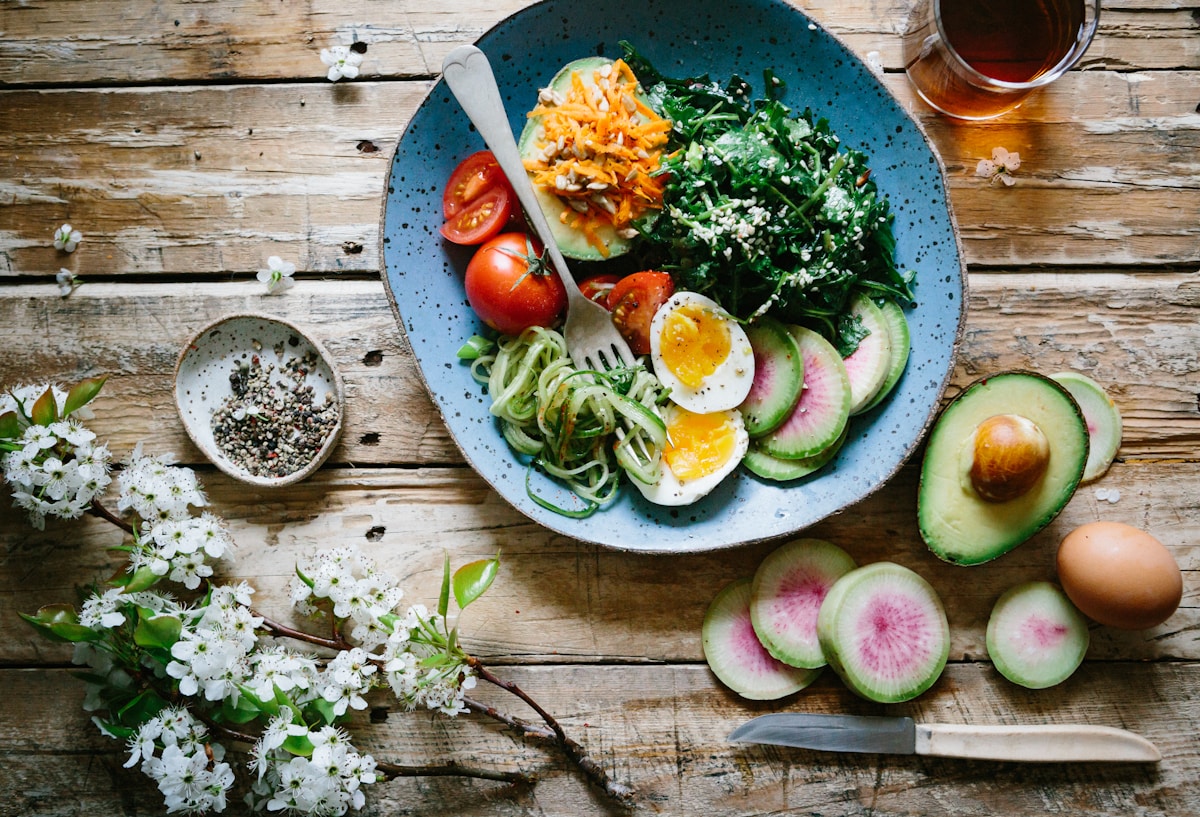
Dietary changes are often more powerful than any single herb for PCOS. Key principles:
What to Reduce or Eliminate:
- Refined sugar and white carbohydrates — the primary insulin spike triggers
- Conventional dairy — contains growth factors and hormone precursors
- Gluten (for women with PCOS-thyroid overlap) — inflammatory for many
- Caffeine — elevates cortisol, worsening adrenal hormone production
What to Increase:
- Low-glycaemic carbohydrates — sweet potato, oats, lentils, beans
- Omega-3 rich foods — fatty fish, flaxseeds, walnuts — reduce inflammation
- Magnesium-rich foods — leafy greens, dark chocolate, pumpkin seeds — improves insulin sensitivity
- Zinc — pumpkin seeds, oysters, chickpeas — reduces excess male hormone activity
- Inositol (found in citrus peel) — arguably the single most evidence-backed PCOS supplement
Movement as Medicine
Exercise is not optional for PCOS — it directly improves insulin sensitivity, reduces male hormones, and promotes ovulation. But the type of exercise matters:
*Best for PCOS:*
- Resistance training (30–45 min, 3 times per week) — the most effective for insulin sensitivity
- Low-intensity walking — 30 minutes daily, especially after meals
- Yoga (reducing cortisol)
*Potentially counterproductive:*
- Excessive high-intensity cardio (more than 60 min, 5 times per week) can elevate cortisol and worsen adrenal-driven PCOS
Managing PCOS for Fertility
If you have PCOS and are trying to conceive, the priority is supporting ovulation. Key interventions:
- Reduce insulin resistance first — diet, Metformin (if prescribed), or Berberine (a natural alternative)
- Herbal support — Symplocos Bark, Asparagus Root, and Saraca Bark combination
- Track ovulation — using basal body temperature or LH predictor strips to identify your actual fertile window
- Consider Chaste Berry (Vitex agnus-castus) — shown to restore ovulation in women with PCOS
VedhaPure's Progenix Capsules offer a concentrated 4-day intensive herbal protocol designed for women planning conception.